Articles
From Chinese Woodcarving to the Watch Dial: How Memorigin Shapes a Story
Explore Chinese woodcarving’s influence on Memorigin watch design: relief, openwork, Dragon and Rooster scenes, and auspicious cloud motifs.
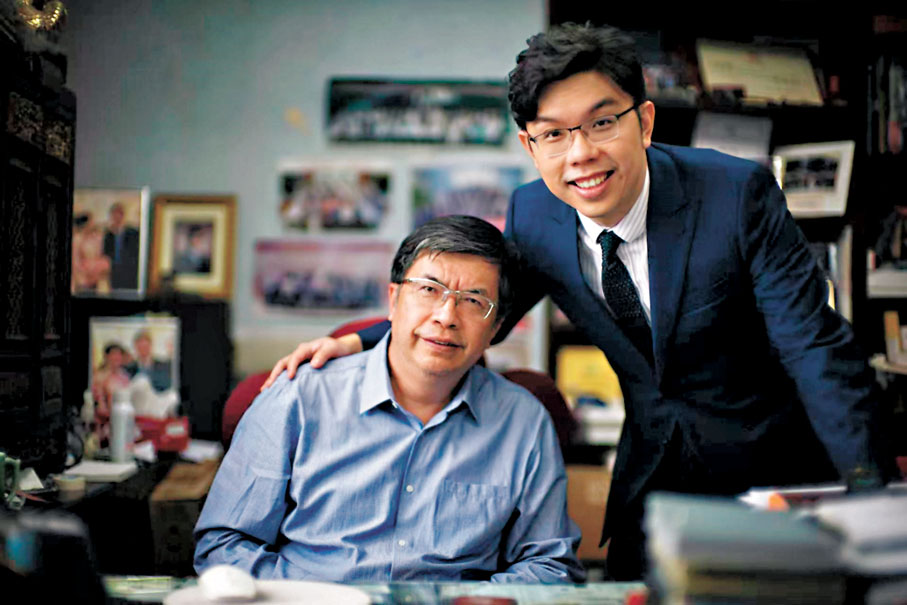
What changes when a carved story moves from a wooden panel to a watch dial? The material becomes different, the available space becomes smaller, and the image must now share its surface with hands and a working movement. For Memorigin, that transformation is a design question rooted in a family’s appreciation of Chinese woodcarving.
A collection becomes a source of ideas
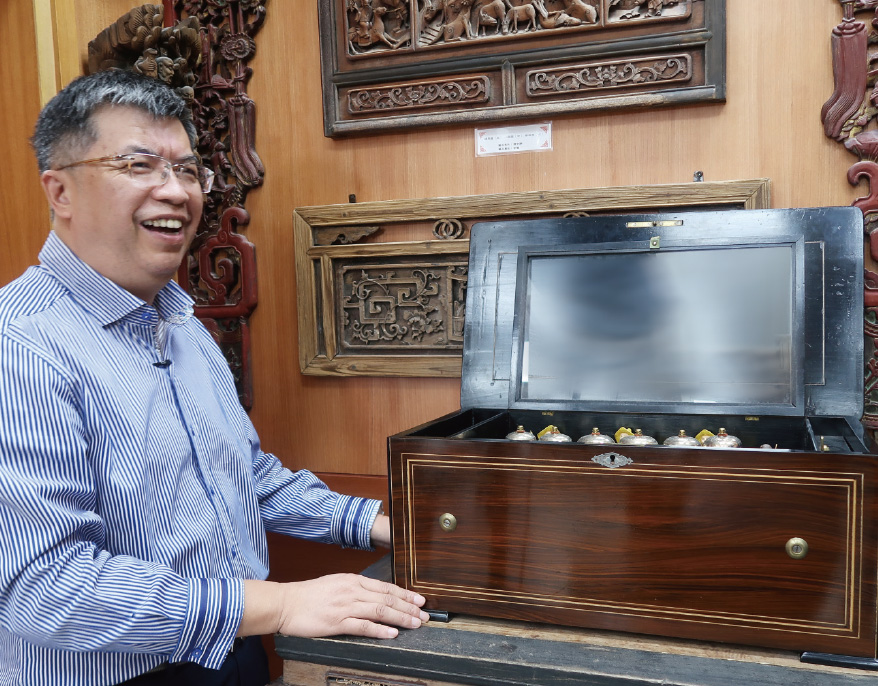
Founder William Shum, JP, grew up with the influence of his father, woodcarving collector Shum Mak-ling. Memorigin’s brand story describes how appreciating those carvings prompted the idea of bringing Chinese art into mechanical watchmaking. The connection is more specific than adding a traditional motif to a finished product: it concerns how a story is composed and how detail is given meaning.
Woodcarving offers lessons in depth, framing and the balance between filled and open space. On a watch, those ideas must be reconsidered around legibility, proportions and the visible mechanism. Inspiration can travel between materials without the dial itself being made from wood.

Relief: giving a small scene depth
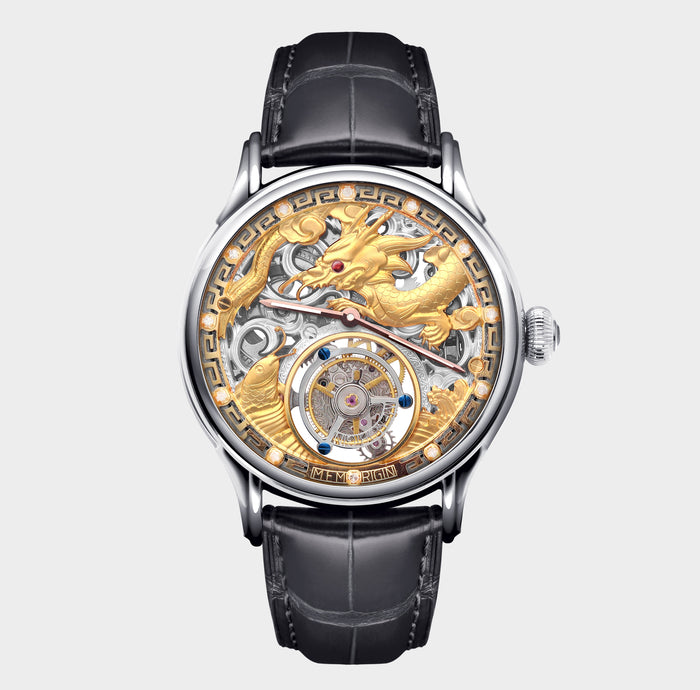
In relief carving, differences in height help separate forms and bring a scene forward from its background. Memorigin’s Zodiac Series – Dragon draws on the woodcarving subject 魚化龍. The brand’s archive connects the theme with perseverance and achievement, giving the sculpted dragon a narrative role as well as a visual one.
Look at how the scene occupies the circular dial and how the tourbillon opening is accommodated within it. The challenge is not to reproduce every detail of a larger carving. It is to retain a clear subject and a coherent composition at a scale that can be appreciated on the wrist.
The Rooster: expression through posture and detail
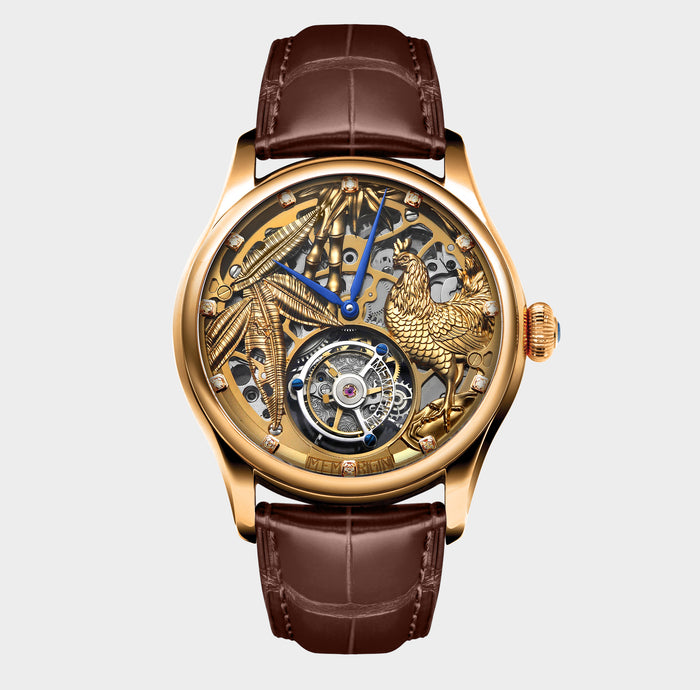
The Zodiac Series – Rooster develops a quieter scene. The original release highlights the bird’s feathers, standing posture and surrounding bamboo. These details work together: the stance gives the subject character, while the finer carving encourages the eye to stay with the image.
To appreciate the design, begin with the outline and then move into the smaller passages. This is a useful habit when looking at Chinese woodcarving too. The larger arrangement establishes the scene; the treatment of individual forms makes it convincing.
Openwork: why the empty spaces matter
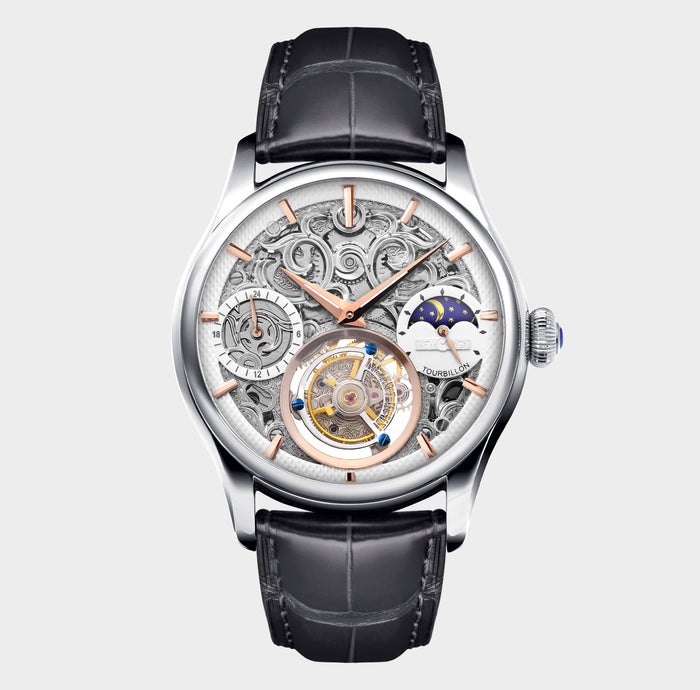
The Auspicious Plus Series takes a different approach, drawing on 祥雲, or auspicious clouds. In the brand’s design account, the motif carries good wishes and harmony. The flowing lines and open areas create a composition through which the mechanism can also be seen.
Open space is therefore part of the image. It gives the eye room to move and allows the cultural motif and mechanical structure to share the dial. The result illustrates how a decorative reference can shape the architecture of a design, rather than remain a surface embellishment.
Tradition survives through considered transformation
These designs are most rewarding when their differences are kept in view. A narrative dragon, a rooster among bamboo and an arrangement of clouds do not express the same idea. Their subjects call for different proportions, levels of detail and relationships with the movement beneath.
That is what makes woodcarving an enduring source of inspiration for a Hong Kong tourbillon brand: not a single style to repeat, but a way of considering story, space and craftsmanship. The old art continues through new decisions, made for an object that belongs to contemporary life.
Questions and answers
Are the featured watch dials made from wood?
No such claim is made here. The connection concerns woodcarving subjects and artistic ideas translated into the featured metal dials.
What does relief contribute to a dial?
Different heights can separate forms and create depth, helping a sculpted subject read as a scene rather than a flat outline.
Do all traditional motifs carry the same meaning?
No. Each subject and composition should be interpreted through its own context and documented design story.
See how carved stories meet contemporary watch design. Arrange a private viewing of Memorigin’s woodcarving collection and culturally inspired tourbillons.